
LEARNING EXPERIENCES for GQ1: What is an ecosysystem?
 Learning Experience 1: What living and nonliving things can we find at our school?
- Students explore the classroom, the school ground and buildings, and the playground.
- The class works together to make a list of what they notice
- Back inside the classroom or at an outdoor classroom, students catalogue their observations into groups of living and nonliving things
- Example of discussion questions:
- “What are different types of living and nonliving things?
- How do you know what is living and what is nonliving?
- What do living things need to be alive?”
- Example of discussion questions:
- Students further categorize their observations into groups of living things (such as animals, plants, etc) and nonliving things (such as rocks, buildings, tools, climbers).
- Students tally together how many observations they made in each category and create a bar graph of the categories observed.
- Learning Experience 2: Build a model of the School Ecosystem
- Example of discussion questions:
- What is an ecosystem?
- What living things do you see?
- Why do you think they chose to live here?
- Do they help each other and how?
- What would happen if one should move or disappear?
- Based on the observations around the school, students create a model of our school or classroom ecosystem in small groups, each group modeling different parts, on a poster board, draw and show how they are connected.
- Example of discussion questions:
LEARNING EXPERIENCES for GQ2: Who lives in or around the river?
- Learning Experience 1: What is a river?
- Read aloud the book What is a River? By Monika Vaicenaviciene
- Examples of discussion questions:
- What do you see living in or around the river?
- Why do you think they live near or in the water?
- How does the river connect them?
- How can we tell if the river is clean?
- Read aloud the book A River by Marc Martin
- Examples of discussion questions:
- Have you ever visited a river or a stream?
- What did you see there?
- What did you hear or feel while you were there?
- If you were a tiny leaf or twig, where do you think the river would take you?
- How did the river change from beginning to end of story?
- Why do you think rivers are important?
- Examples of discussion questions:
- Examples of discussion questions:
- Read aloud the book What is a River? By Monika Vaicenaviciene
- Learning Experience 2: Look at river ecosystem – field trip
- Visit a local natural river ecosystem
- In the case of this Unit, in New Haven (CT), the suggested river is the Quinnipiac River at its final section that merges with the Long Island Sound, in a salt marsh environment that goes through the Quinnipiac Meadows Eugene B. Fargeorge Nature Preserve – see more information about the Quinnipiac River (for Kids)
- Similar to the school exploration activity, students explore the nature preserve and make a list of different categories of living and nonliving things they notice:
- Initial walk through trail
- Example of investigative questions:
- What do you see?
- What do you hear?
- What do you wonder about this place?
- Salt Marsh
- Example of investigative questions:
- How is the marsh connected to the river?
- What living/nonliving things do you see in the marsh?
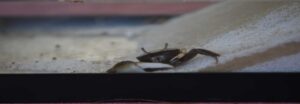
- Observe Fiddler Crabs and their burrows. Allow students to gather crabs (if they can catch them!)
- Example of investigative questions:
- Shoreline
- Examples of investigative questions:
- What living things do you see here?
- How are they different from the marsh?
- What can you see with just eyes and what can you observe with binoculars or magnifying glasses?
- Help students notice the differences between macro and microorganisms – teachers can have the support of apps, such as Seek and iNaturalist
- Examples of investigative questions:
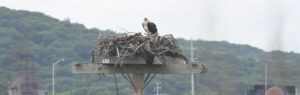
- Birds
- Example of investigative questions: “What birds do you see or hear in the area? Are there nests nearby? Why do you think the birds are here?”
- Help students notice the differences between macro and microorganisms – teachers can have the support of apps, such as Merlin
- Students tally together how many observations they made in each category and compare to the school ecosystem
- Example of investigative questions: “What do you notice? What is the same? What is different? Make a Venn diagram!”
- Students find a quiet spot to sit and do some nature journaling, reflecting on their visit, documenting what they have seen, heard, felt, smelled, and touched
- Example of investigative questions:
- Initial walk through trail
- Visit a local natural river ecosystem
- Learning Experience 3: People & Water – Field Trip
- Start by showing pictures of communities near rivers, lakes, and oceans
- Examples of discussion questions:
- Why do people live near water?
- What do we use water for?
- Who helps take care of the rivers, lakes, and oceans?
- Why is that important?
- Share the history of a location by the visited river of special cultural relevance to local native peoples
- In the case of this unit, we discussed Grannis Island and its relevance to the Quinnipiac people – example of interesting resources: Grannis Island History, Gather New Haven, Grannis Island Podcast
- Visit a local organization to help introduce local Native American cultural resources
- In the case of this Unit, in New Haven (CT), the field trip is suggested to visit either one or a combination of the following organizations: the Quinnipiac River Watershed Association, the Meigs Point Nature Center, the Connecticut River Museum, the Quinnipiac Dawnland Museum
- Examples of discussion questions:
- Start by showing pictures of communities near rivers, lakes, and oceans
LEARNING EXPERIENCES for GQ3: What do living things need to survive? How does the river provide for these needs?
- Learning Experience 1: Needs of Living Things Matching game
- Nature Journaling activity:
- Students find a quiet spot outside to sit and reflect on what living things in a river need to survive
- Example of wondering questions:
- What does every living thing need?
- How do living things depend on each other?
- How does the river provide each of those needs?”
- Students match organisms (such as plants, frogs, fish, turtle, fiddler crabs, birds and insects) with: Food / Air / Space / Water / Shelter – Example of Matching Chart
- Class discusses why each match is important
- Example of discussion questions:
- Look at your matches for the frog and the plant. What basic needs do they share? What do they need that is totally different?
- Why do you think water is so important to living things in a river ecosystem?
- Why does a fiddler crab need mud to dig its burrow, while an osprey needs high tree branches or platform nests? How do their shelters keep them safe?”
- Example of discussion questions:
- Nature Journaling activity:
- Learning Experience 2: Who Depends on Me?
- Living Things Investigation:
- Students individually select a living thing observed in the field trip close to the river and research about their life, including:
- Name of organism
- How it stays safe
- Where it lives
- What helps it survive (adaptations)
- What it eats
- Students take turns to report to their peers what theft found out
- Students individually select a living thing observed in the field trip close to the river and research about their life, including:
- Ecosystem web game
- Students sit in a circle and each student receives a card with a river organism or a habitat feature – Example of deck of cards for a Northeast forest habitat
- Students identify which other organism / feature their own card depends on and pass a ball of yarn to the corresponding student, slowly creating a web showing ecosystem connections
- Example of discussion questions:
- Which organisms or features have the most strings attached to them?
- Why do you think so many things in our forest depend on water, soil, or plants?
- When one string goes loose, does it affect just one person, or does the wiggle travel across the whole circle? What does that teach us about living things in a habitat?
- Let’s remove one organism from this ecosystem – what happens to their direct connections? What about the ecosystem as a whole?
- River food web
- Students create a model to represent a river food web – see Food Chain Video
- In this case, pairs of living things are connected by arrows that start at the organism that is consumed as food and pointed to the organism that consumes it
- Example of discussion questions:
- Where would we place the sun in this model?
- Who are the living things that use sunlight as ‘food’? What do we call them?
- Who are the living things that feed on plants? What do we call them?
- Who are the living things that eat animals? What do we call them?
- What happens if one organism disappears?
- Example of discussion questions:
- Living Things Investigation:
LEARNING EXPERIENCES for GQ4: Where do living things live? How does the river provide shelter and protection?
Note: Through the lenses of a local species of fiddler crab, this learning experience helps students investigate animal habitats and how river ecosystems provide shelter and safety. Educators may select a specific native species to explore how local aquatic habitats offer essential safety and protection for resident wildlife.
- Learning Experience 1: Fiddler Crab Habitat Observation
- Living things live in habitats that provide everything they need to survive—food, water, air, space, and shelter.
- Students observe how Fiddler Crabs behave using videos – Suggestions:
- Point out different behaviors that students can observe, such as:
- Burrow
- Feed
- Wave claws
- Interact with one another
- Hide
- Examples of discussion questions:
- What did you notice about the crab’s claws, legs, or shell?
- Did all the crabs look the same, or did you spot any differences?
- Can you behave like a fiddler crab? Why do you think they behave that way?
- Do you think these behaviors help them survive? If so, in which way?”
- Students observe and record (on anchor charts or in their journal)evidence of:
- Food sources
- Water
- Shelter
- Air
- Examples of discussion questions:
- How does the river meet the need of the fiddler crab?
- What did you notice the fiddler crab doing with its claws when it was looking for food?
- How does it use the river mud to find tiny things to eat?
- Learning Experience 2: Build a Fiddler Crab Habitat
- Students become river ecologists to design and build model salt marsh homes using natural materials like mud, sand, and marsh grass. By creating these miniature riverbanks, young learners demonstrate how local habitats provide fiddler crabs with food, water, air, space, and shelter.
- Materials: (Fiddler Crab Habitat)
- Substrate
- Water
- Rocks
- Plants
- Burrows
- After students complete their projects, they show their aquariums to the class and explain how each part helps the Fiddler Crab to survive
- SUGGESTION: If building a habitat inside the classroom is not possible, you can opt for dramatic play Fiddler Crab Habitat center (Dramatic Play Option)
- Examples of discussion questions: Where would your fiddler crab go to hide if a big bird flew over the riverbank? How did you make sure your crab has both a place to walk on land and a place to get its gills wet? Which part of this model habitat allows the fiddler crab to gather food or algae?
- Learning Experience 3: Fiddler Crab Inquiry & Experimentation (see Seedlings Fiddler Crabs)
- Students generate questions based on their observations of fiddler crabs, organize their thinking using an Inquiry T-chart, select a single testable variable, collect simple data, and make guided predictions/hypotheses.
- Step 1: Whole-Class Inquiry T-Chart
- Students generate questions based on their observations of fiddler crabs
- Begin a class discussion to capture student observations and curiosity
- Draw a large T-Chart on the anchor chart board:
- Learning Experience 3: Fiddler Crab Inquiry & Experimentation (see Seedlings Fiddler Crabs)
| What We Noticed (Observations) | What We Want to Know (Questions) |
| Example: The crabs stay near the corner. | Example: Why do they always go to the corner? |
| Example: The crab hid when I walked by. | Example: Do they like the dark better than light? |
- Step 2: Selecting One Variable
- Teacher guides students through the process of choosing one variable
- “We noticed so many neat things! But if we want to test something, we can only change one thing at a time so we know what made the crab move. Let’s pick one question to test together.”
- First-Grade Focus – Keep options simple and binary
- For example: Light vs. Dark OR Warm vs. Cool (see examples below)
- Step 3: Making a Prediction/Hypothesis
- Teacher models how to connect an observation to a guess – use another variable (not the one students chose) to model:
- For example, if the question: Do fiddler crabs prefer light or darkness?
- Sentence Frame for Students: “I noticed a fiddler crab moving to the corner of the container. I think the crab went there because it is dark and crabs prefer to hide from light. So I predict the crab will choose darkness”
- Students in pair practice to create a similar guess using the same structure:
- “I noticed a fiddler crab moving to _____________. I think the crab went there because ____________ and crabs prefer to / like to _____________. So I predict the crab will choose ________________”
- Step 4: Setting Up the Experiment
- Keep the setup physical and visual, and use simple materials that can be found at school or at home
- Students brainstorm how to create an experimental set up inside a container with different conditions for the variable they had chosen to investigate (see examples below)
- Multiple containers can be modified to run the experiment simultaneously
- During the experiment, one crab at a time is gently released in the center of the container. This procedure should be repeated at least 15 times,with 15 different crabs, always one crab per container at a time.
- Step 5: Collecting Data
- Each experimental container is observed by a pair of students
- Set a timer for 10 minutes. Every 2 minutes, ring a chime and have students look at which side of the experimental container the fiddler crab is standing.
- Students use a simple tally mark chart or picture chart to annotate their observations
- Step 6: Compiling Data & Showing Results
- Transfer the tally marks to a giant class bar graph using sticky notes or colored square stickers
- Build one graph for each observation – at 2 minutes, 4min, 6min, 8min, and 10min
- Count up the stickers on each condition of the experiment – For example: Light vs. Dark OR Warm vs. Cool (see examples below)
- Examples of discussion questions:
- How many times the crab was observed under one condition? And under the other condition?
- What do you think it means?
- Is that what you expected in the beginning?
- Have their preferences changed over time? If so, why?
- Note: Examples of hands-on investigation options for your class:
- Option A: Light vs. Dark
- Investigative Question: Do fiddler crabs prefer light or darkness?
- Hypothesis Frame: “I predict the crab will spend more time in the [light / dark] area because…”
- Light vs. Dark Setup: Cover one side of a container with black construction paper/felt to create a shadow side, while covering the other side with transparent plastic sheet, leaving it exposed to room light
- Option B: Warm vs. Cool
- Investigative Question: Do fiddler crabs prefer warm or cooler spaces?
- Hypothesis Frame: “I predict the crab will spend more time in the [warm / cool] area because…”
- Warm vs. Cool Setup: Place an ice pack or cold damp towel under one side of the container exterior, leaving the other side at room temperature.
- Option A: Light vs. Dark
- Teacher models how to connect an observation to a guess – use another variable (not the one students chose) to model:
- Teacher guides students through the process of choosing one variable
- Step 2: Selecting One Variable
LEARNING EXPERIENCES for GQ5: What changes a river? What makes a river healthy and unhealthy?
- Learning Experience 1: Natural Impacts
- The Quinnipiac River Mystery Detectives – A multi-sensory learning activity where students act as “River Detectives” to solve the mystery in the story
- Learning Experience 2: Beaver – The Ecosystem Engineer
- Book: Building by Henry Cole
- Examples of discussion questions:
- What role does a beaver play in a river ecosystem?
- How do beaver adaptations help them be river engineers?
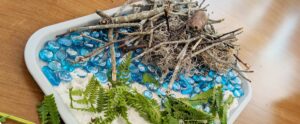
- Build a Mini Dam
- Give students sensory materials (such as playdough, clay, pebbles, twigs, popsicle sticks, etc) or have them go outside and gather their own natural materials
- Challenge them to construct a barrier in a shallow tray that stops water poured from a cup
- Resources:
- Examples of discussion questions:
- Book: Building by Henry Cole
- Learning Experience 3: Healthy River vs Unhealthy River Sort
- Story: The Children Who Cleaned up a River (https://www.youtube.com/watch?v=YDodb8e75W8)
- Identify conditions that support and destroy life
- Students sort pictures into two categories: healthy and unhealthy
- Students discuss why they think each picture is healthy or unhealthy- “How do these conditions affect survival?”
- Example of Sorting Chart that can be drawn on chart paper, where the pictures can be sorted onto it:
- Learning Experience 3: Healthy River vs Unhealthy River Sort
| Healthy River | Unhealthy River |
Native plants Clean water Fish Insects wetlands | Trash Pollution Dead fish Oil erosion |
Nature’s Neighborhoods: Exploring Communities and Ecosystems
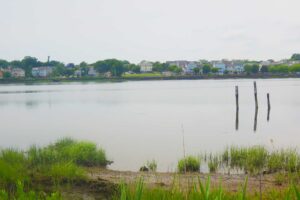
Second Grade / Third Grade Students will explore local ecosystems through hands-on experiences and investigate the ways human communities and nature impact one another. Drawing from Indigenous knowledge and other local perspectives that demonstrate a deep understanding of and connection to their ecosystems over generations, students will examine the benefits and challenges of balancing the use of ecosystem resources with caring for and protecting them.
Home Sweet Home: Exploring Animal Habitats
Pre-Kindergarten (ages 3-5 years)
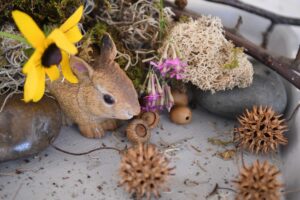
In this unit, students will explore different types of homes, and why each home is important to its inhabitants. They will have the opportunity to observe, compare, and construct different types of homes, and begin thinking about how a home is part of a greater community.