Understanding the Relationship between Humans and Water
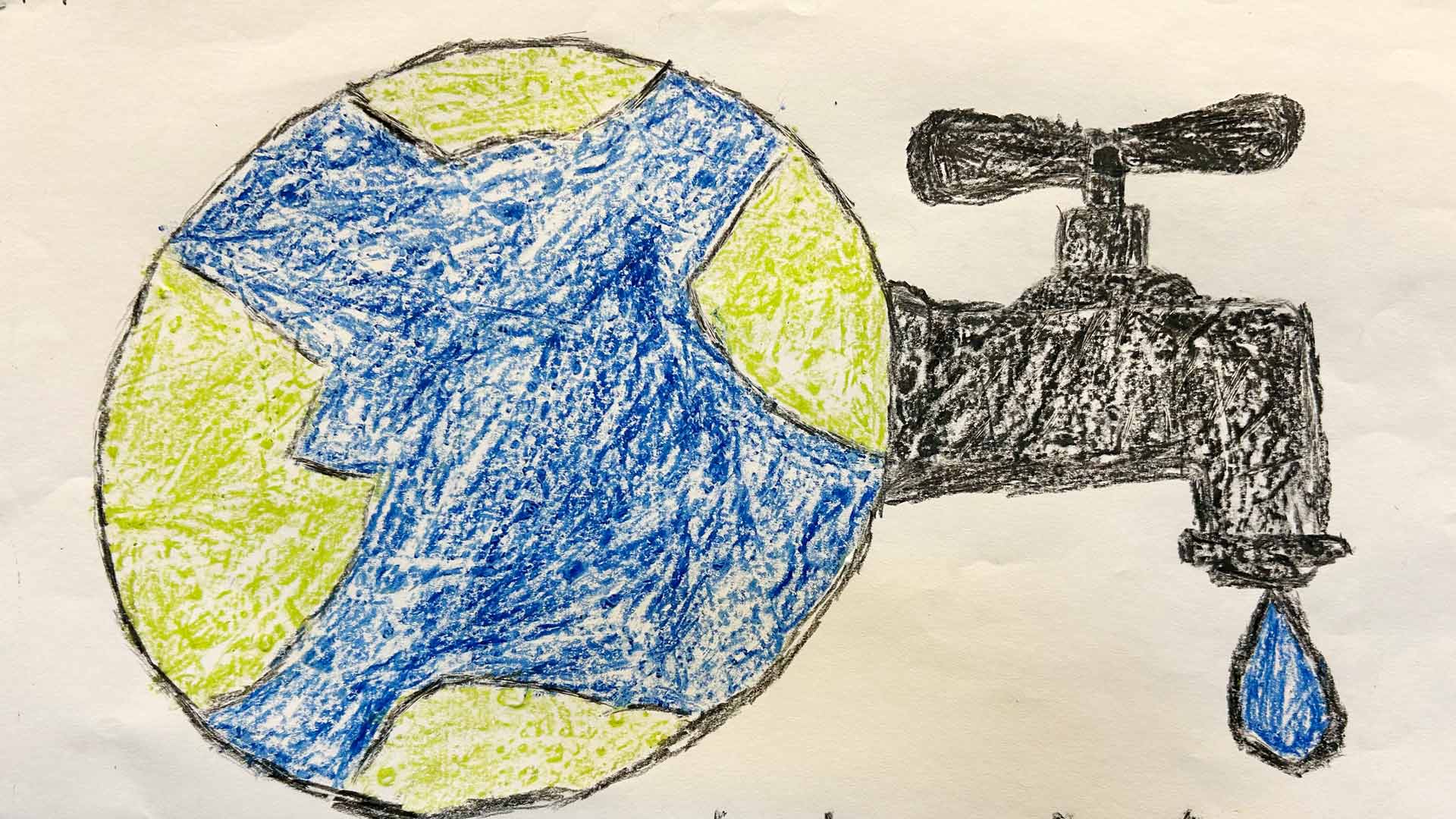
Fourth graders at Nathan Hale School explored local waterways and connected with students in South Carolina and Maine to learn about the impact water has on our lives, culminating in an interdisciplinary project intended to inspire community members to be a “friend” to water.
Project Narrative
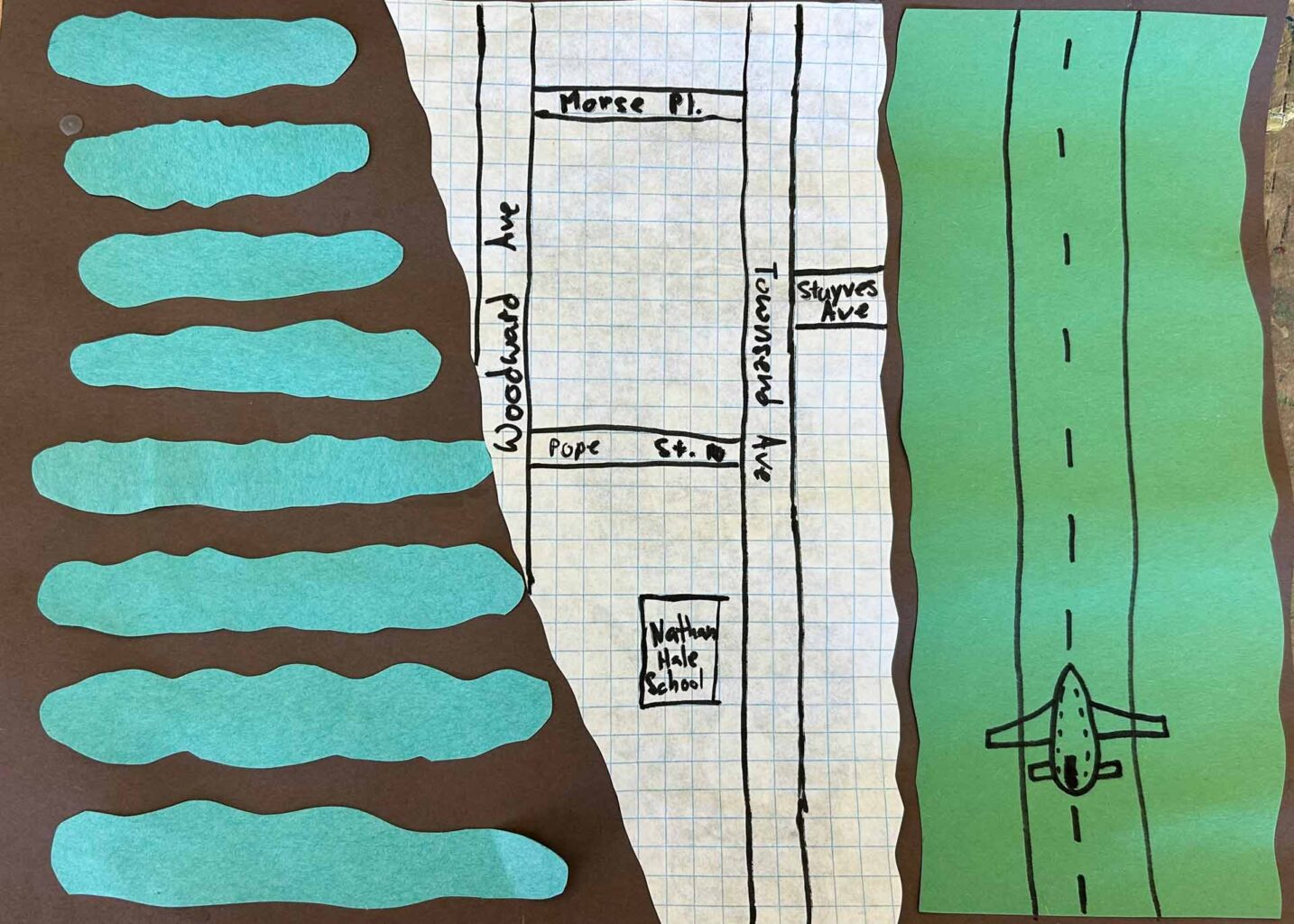
Situated in the cove of New Haven harbor on East Shore Park, Nathan Hale School is just a single block away from Long Island Sound. In fact, the water is visible from the outdoor classroom that Steff Smelser created with her students. When an extended conversation emerged one day from students’ concerns about bottle caps and plastic bags harming the wildlife in their ecosystem, Steff invited students to explore their own relationship, or friendship, with water.
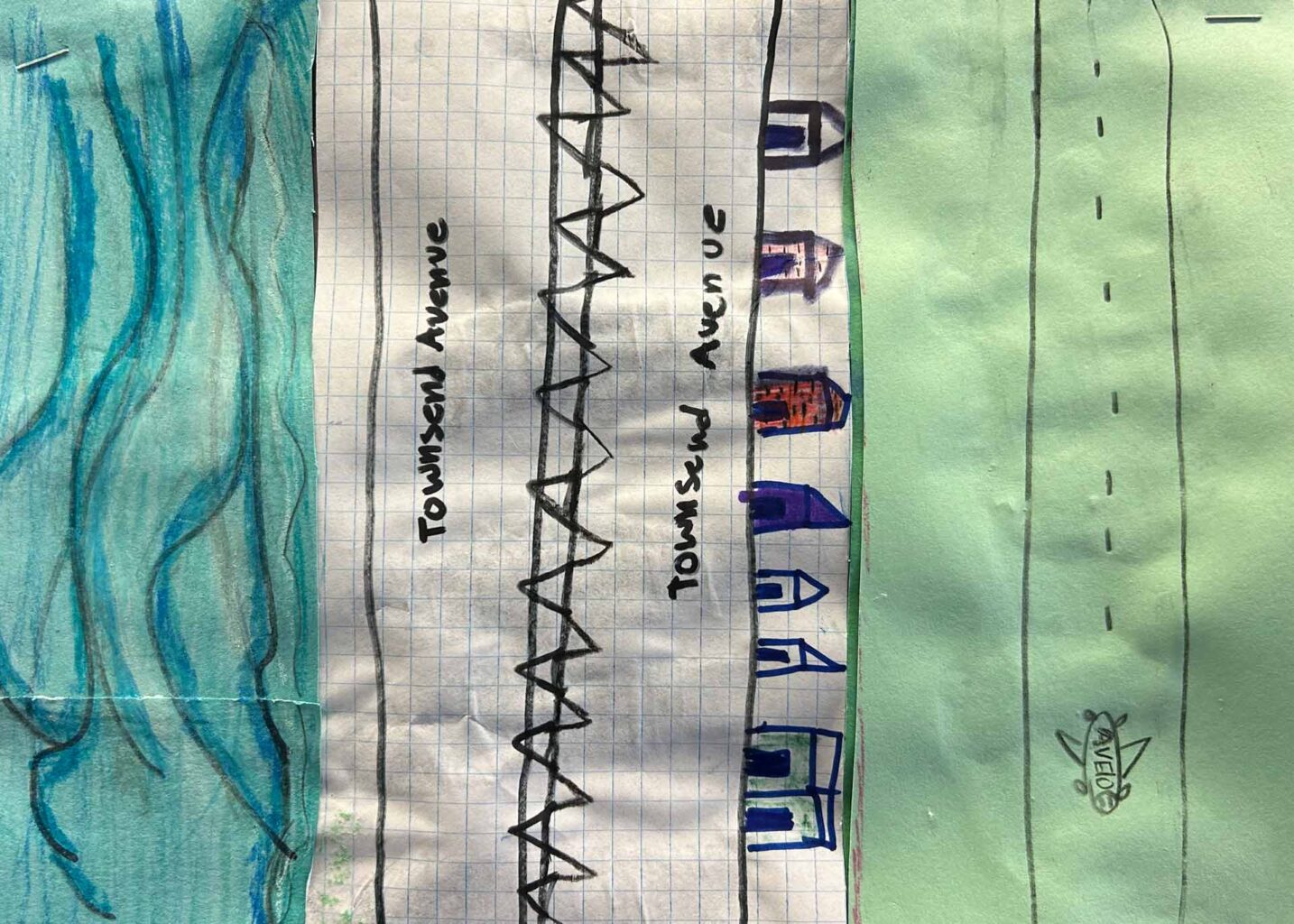
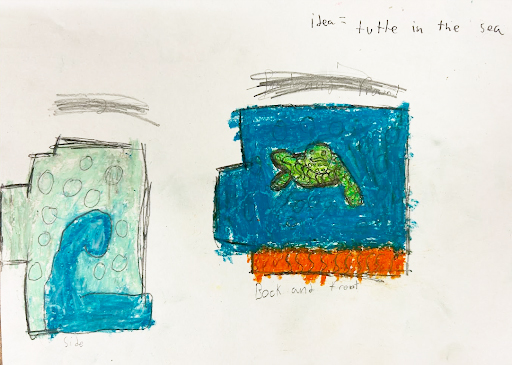
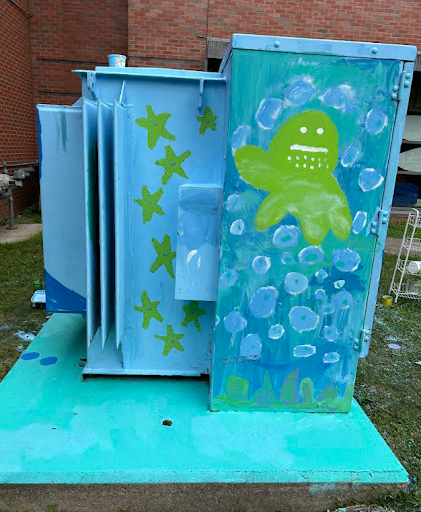
Through art experiences, mapping, and poetry, students explored the impact that water has on their lives, and in turn, how humans impact water ecosystems near and far. While Nathan Hale students explored their local waterways, the pen-pal correspondences they embarked on with students in South Carolina and Maine introduced them to the concept that we are all connected. As a culminating project intended to beautify the school’s campus and spark appreciation for our waterways, students utilized their artistic skills to transform electrical boxes and an unsightly dumpster into beautiful watery scenes.
Learning Outcomes
- Increased connection to place – especially to water elements
- Increased awareness of the human impact on water – for both the students and the community
- High engagement and pride in the project
- Increased engagement in writing
- Learners got to see the impact of their art on the community and experience art as activism
Standards
VA:Cr1.1.4a Brainstorm multiple approaches to a creative art or design problem.
VA:Cr1.2.4a Collaboratively set goals and create artwork that is meaningful and has purpose to the makers.
VA:Cr2.1.4aExplore and invent art-making techniques and approaches.
VA:Cr3.1.4a Revise artwork in progress on the basis of insights gained through peer discussion.
Resources
- Books & Media
- Community Partners
Thirst by Varsha Bajaj
A River Speaks – PBS – https://video.cptv.org/video/a-river-speaks-dzsj0d/
Lots of Fish – https://www.facebook.com/LotsofFish/
Regional Water Authority – https://www.rwater.com/
Principles of Place-Based Learning:
- Community as classroom
- Inquiry-Based
- Design thinking
- Local-to-global
- Learner-centered
- Interdisciplinary
Principles of Play-Based Learning:
- Active
- Engaged
- Meaningful
- Social
- Iterative
- Joyful
Portrait of a Graduate:
- Synergistic Collaborator
- Effective Communicator
- Critical Thinker
- Self-Directed Learner
- Global Citizen
Seedlings-Based Learning:
- Grounded in Place
- Developmentally Appropriate
- Integrative Learning
- Community Partners & Mentors
- Intentional Reflection